
![[Análisis] SteamWorld Quest: Hand of the Gilgamech](https://img.vidaopantalla.es/2019/04/steamworld-quest.jpg)
A few years ago, in 2010 to be exact, an independent developer called Image & Form released SteamWorld: Tower Defense, a real-time strategy game that placed us in an alternate reality where Charles Babbage developed ideas for improving computers and technology in the 19th century, and where robots were eventually created with that technology, leading to the creation of very powerful weapons.
In the 20th century, humans would eventually devolve and end up in caves, while steam-powered robots, known as Steambots, would conquer the surface world. This is where SteamWorld: Tower Defense begins, where, as the city sheriff, you will experience the war between Steambots and humans up close.
Then, in 2013, the company released SteamWorld Dig, a game based on the same world as the first game, but instead of being a real-time strategy game like the previous one, it will be an excavation platform game with Metroidvania touches where we will take on the role of Rusty, a lone steambot miner. In that game, we'll have to fight against Vectron, a technological super-machine.
Then, in 2015, SteamWorld Heist was released, a game that featured a rather large flash-forward and took us to the cataclysmic future of SteamWorld, where the Earth has been destroyed. The game will be neither a real-time strategy game nor a platformer, but a turn-based combat video game in which Captain Piper Faraday will fight against all kinds of space creatures.
In 2017, the company released the sequel to SteamWorld Dig, SteamWorld Dig 2, for Nintendo Switch, PC, PS4, and PS Vita, returning us to the mines of the 20th century and platforming after going into the future in 2015. The game later arrived on Nintendo 3DS and Xbox One in 2018. In this video game, Dorothy, Rusty's friend, is scared that he hasn't returned after fighting Vectron and embarks on an adventure in search of Rusty, ending up in a robot town called El Machino, where earthquakes are devastating the city. Dorothy will put aside her search for Rusty and combine it with that investigation, which will lead directly to what led to SteamWorld Heist, becoming its prequel.
Originally exclusive to Nintendo Switch and later released on PC and Google Stadia, SteamWorld Quest: Hand of the Gilgamech moves from tactics and platforms to a card-based RPG. Today we're going to hit Start and analyze SteamWorld Quest: Hand of the Gilgamech for Nintendo's hybrid:
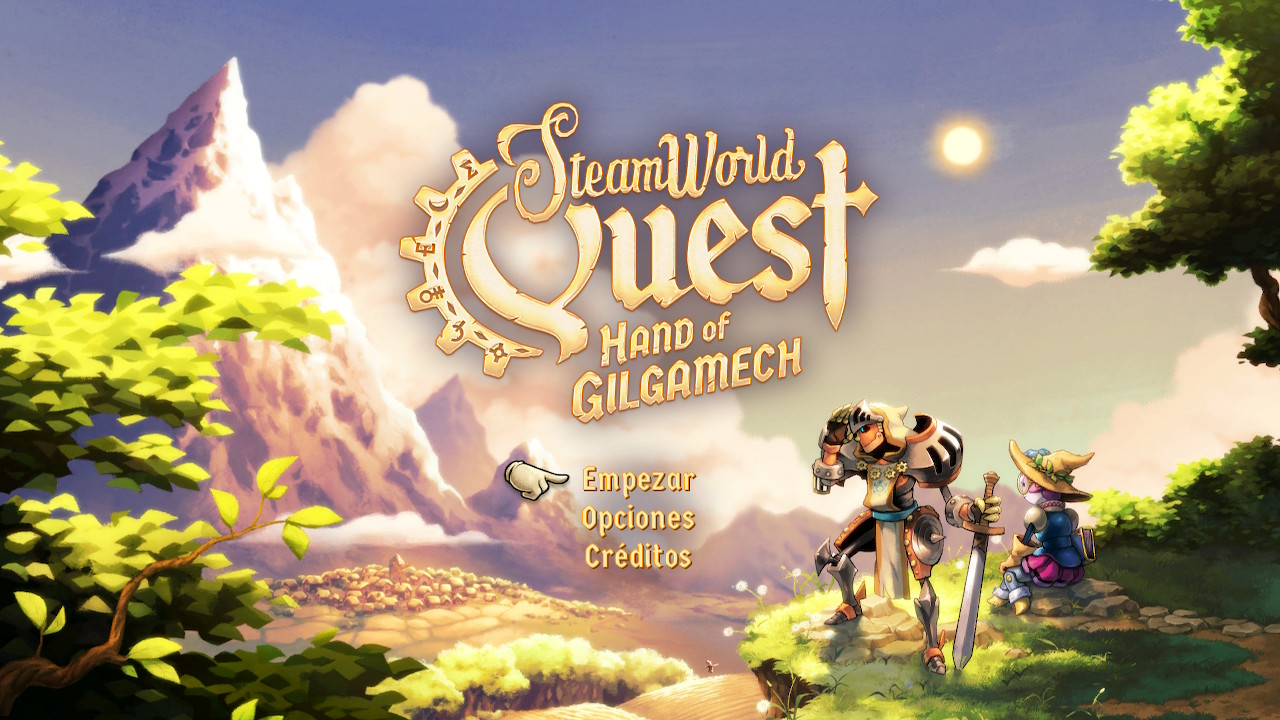
In Act 1, the story begins with Armilly, the knight who wants to join the Heroes' Guild, and Copernica, the alchemist; two robot girls who are looking for mushrooms in the forest and who will meet a very funny mysterious shopkeeper along the way that we will meet throughout the story. Armilly talks about her favorite story, the story of a great hero named Gillgamech who defeated a great monster and when they return to their village, they see a lot of smoke and the entire town burning, including the town hall.
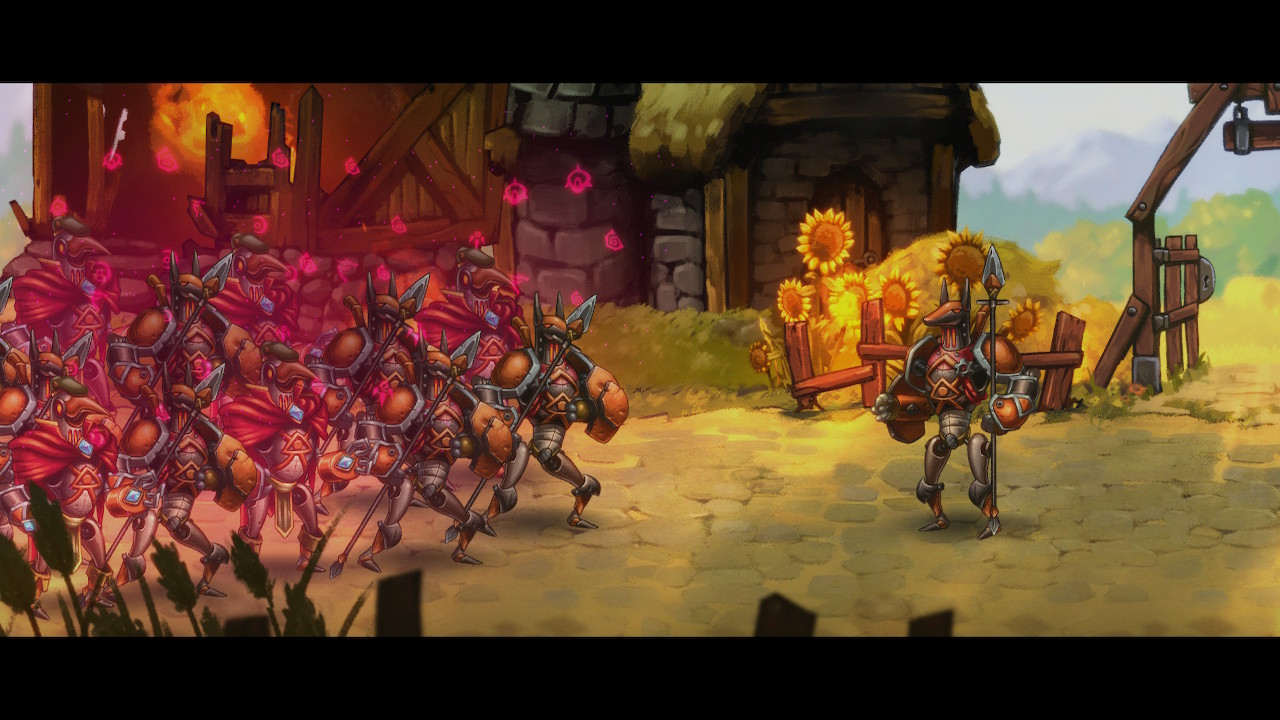
There they encounter the Army of the Void who attacks them, but they manage to defend themselves. In their attempt to leave the city, they meet their friend Galleo, a large robot who sprays water under pressure and lives in his mother's basement, who reluctantly joins the group. Just after, the heroes head to leave the village when they meet Captain Canary and after defeating him, they head off to save the heroes of the Heroes' Guild.
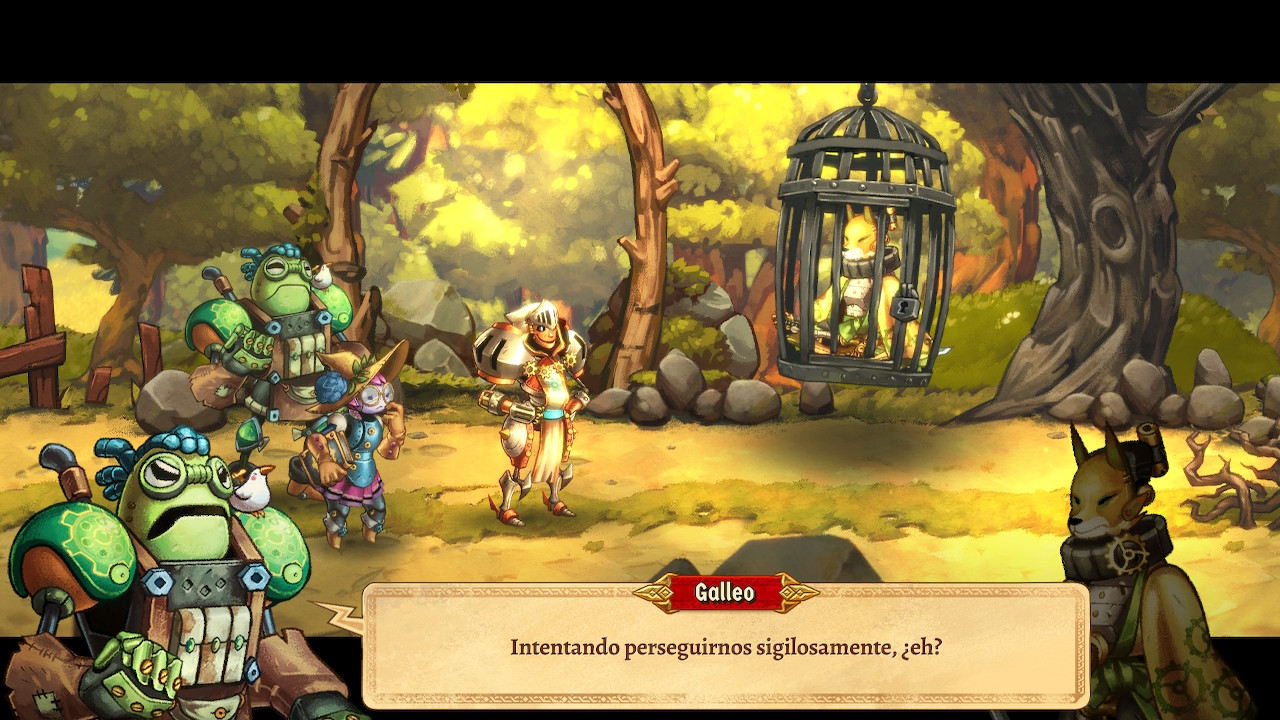
Along the way, they meet Orik, the advisor who helped Gillgamech and who was imprisoned by the Army of the Void. When we free him from the cage, he will join our adventure. At that moment, we will go to a cave where we will again find Captain Canary along with a large dragon and the caged heroes of the Heroes' Guild. They will defeat him and free the heroes, although they will not allow Armilly to join the Heroes' Guild. After that, they will go to the Alchemy Academy, where they had found several books.
Act 2 begins at the Alchemy Academy, where they'll encounter the thieving sisters Tarah and Thayne, who eventually join the team to stop a riot that seems to have started at the Alchemy Academy. After the battle, our heroes head to the location of the object: the city Tarah and Thayne come from, which is completely lifeless and inhabited by many druids, orphans, and monsters.

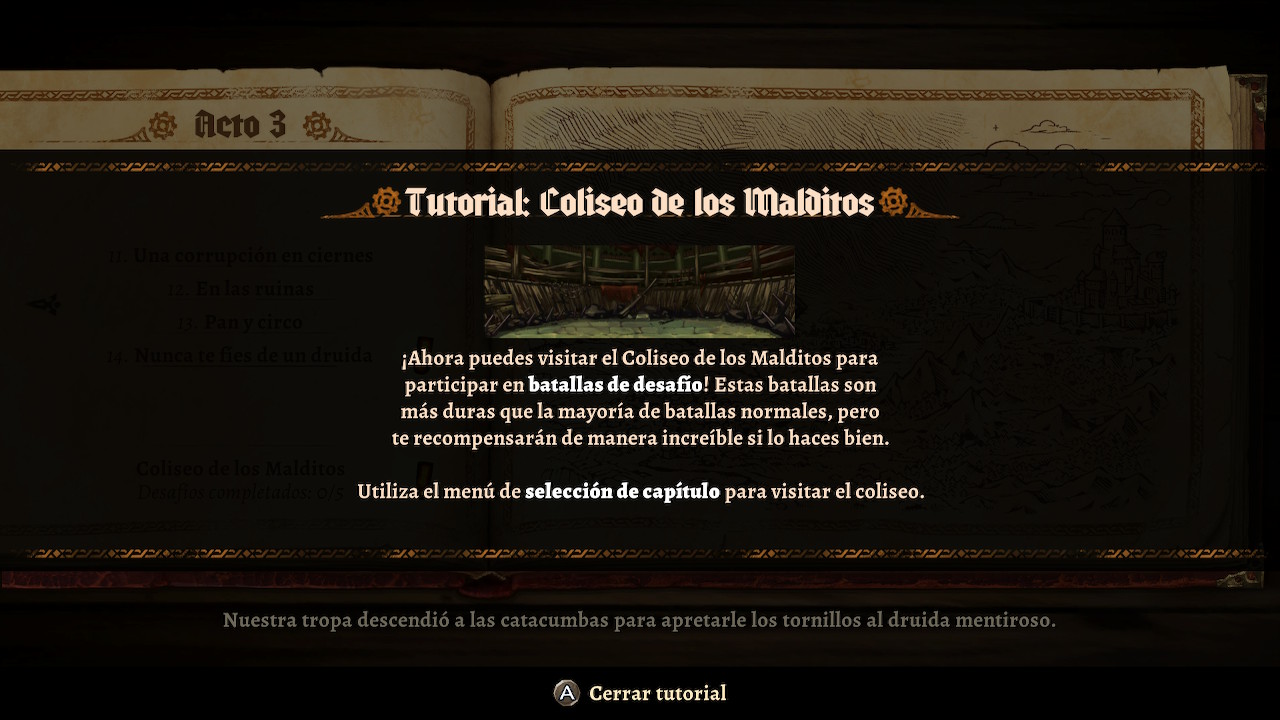
There, they question various people, and they are eventually led to a coliseum called the Hero Coliseum, where they must defeat several waves of enemies that will lead them back to the dragon's owner, the person who possessed the item. The Hero Coliseum unlocks exclusive Horde challenges that won't earn experience, but will allow them to obtain items, money, and accessories, accessible from any chapter. In that same chapter, the true leader of the Void Army is revealed—a rather spectacular revelation, and this is when Act 3 begins.
The story becomes quite interesting and entertaining thanks to its characters: Armilly, Copernica, Galleo, Orik, Gillgamech, and even all the supporting characters; they all have some kind of development in their personalities and stories, no matter how minor they are. The humor is well-included throughout, and there are moments you honestly don't expect because they give almost no clue that this could be the case.
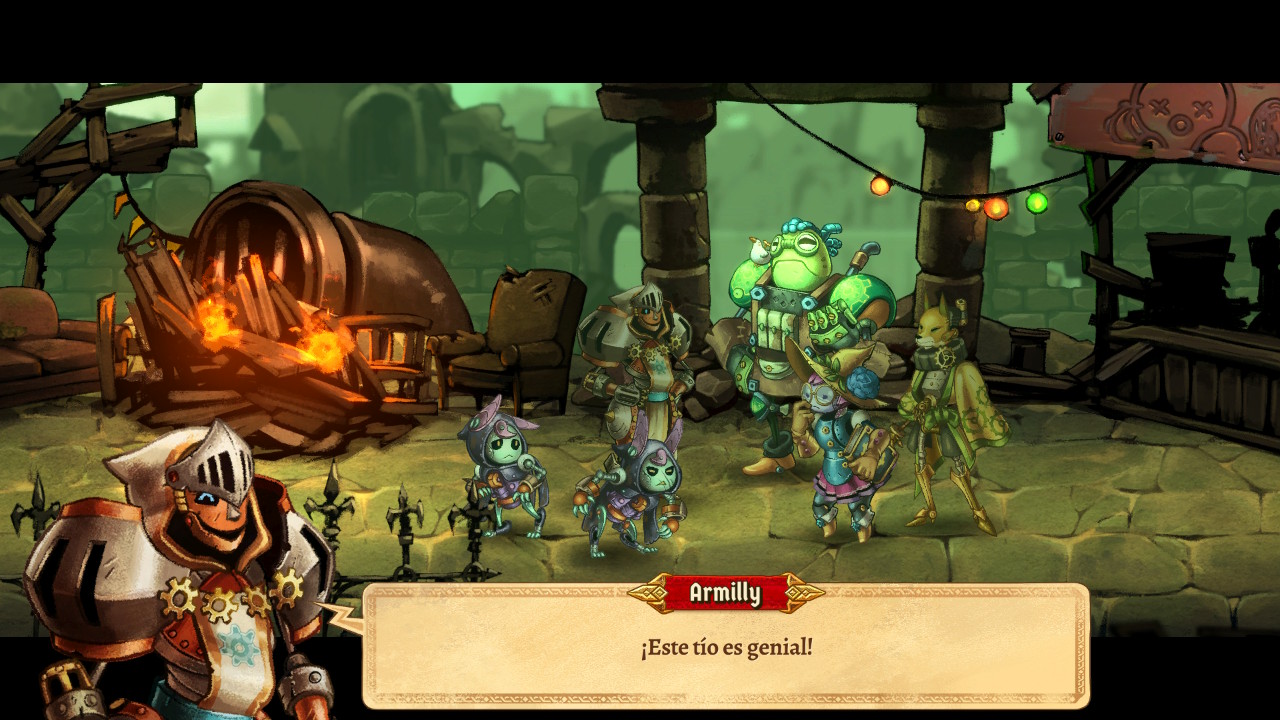
The gameplay is very simple and straightforward at the same time. To begin, we'll choose the story chapter we want to play. It's not a free world, but it doesn't go by levels either. Instead, each chapter has its own part of the world map, and sometimes there are even parts that are repeated, but only a few. When you enter a chapter, you'll find the current map, which is 2D in style, but with quite a bit of depth, so much so that you can dodge enemies if there aren't two of them together. If there are two enemies together, prepare for battle.
And before talking about battles, there will be places in the world that will shine, and in those places we can find money to buy items at the Mysterious Shopkeeper's shop, or simply have the characters talk about the shining thing. In battles, we'll have to control three characters, and everything will be different because this RPG uses cards to fight. We'll have two types of cards, each indicated by the color of the character whose attack it is.
The types will be: basic cards, with which we'll obtain a gear when used, because we'll need several gears to use a special attack. Gears will be shared between the three characters.
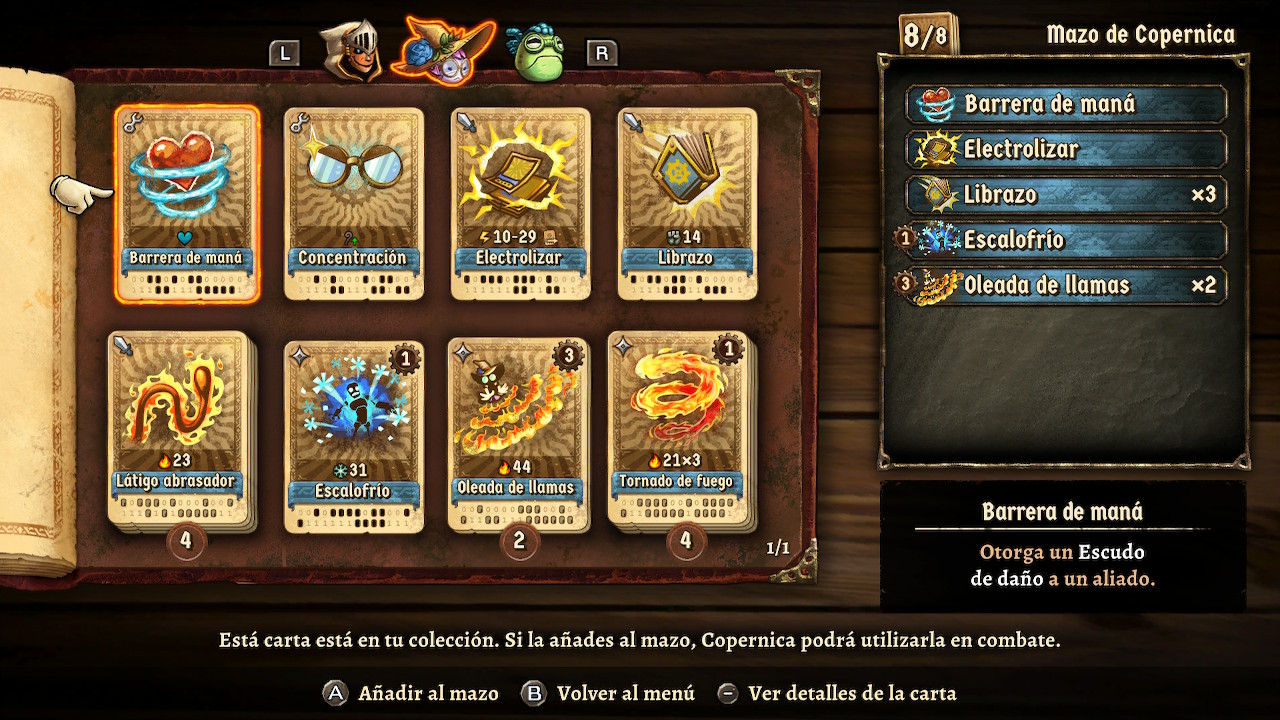
Regarding battle states, we'll have paralysis, sleep, confusion, poison, burning, and several more that could defeat or prevent our character from attacking. We'll also have the classic weaknesses and protections against certain types of attacks: fire, water, electricity... Making the combat system something so complex and adding to that the card chains of the same character that will make you use a fourth special attack, because in each turn we will use a maximum of 3 cards if an accessory does not allow us to use another card.
In addition to those, we've talked about accessories, and depending on the weapon we carry, that fourth card will be different, since it will be programmed by the weapon. In addition to those, the accessories will give us more health or strength and there will be objects to recover or to avoid some status.
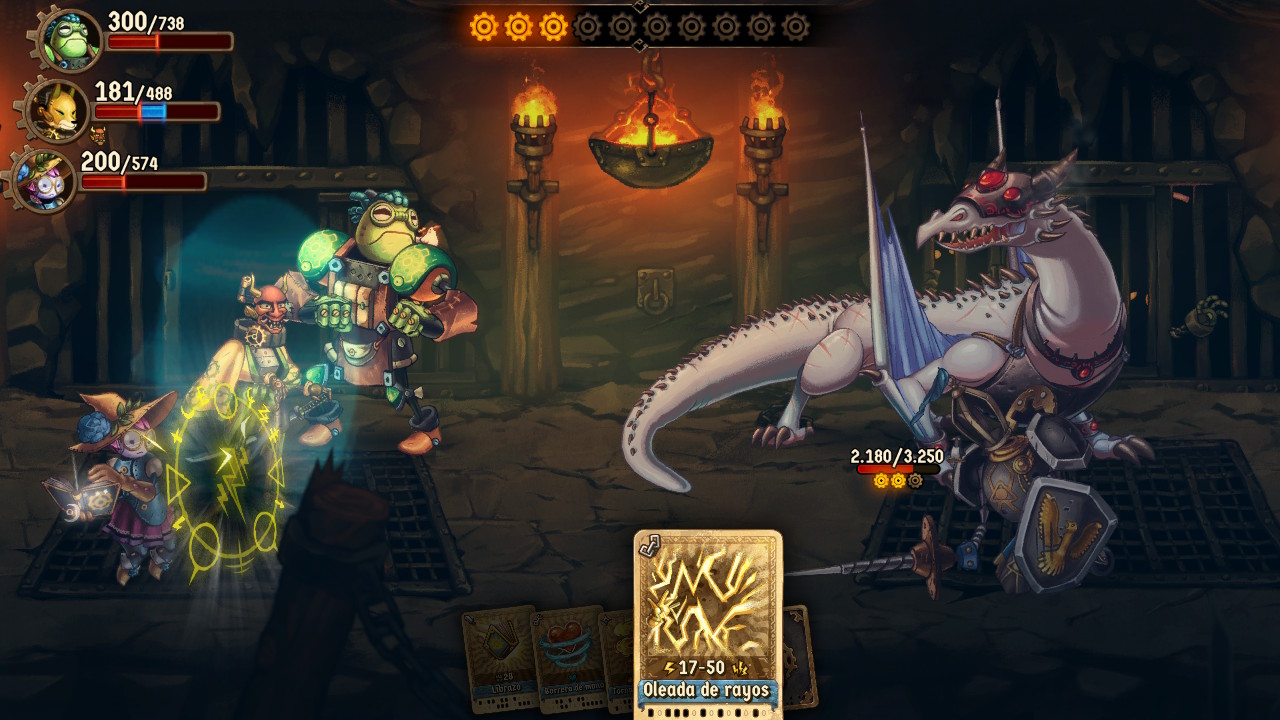
The gameplay is perfect, especially in combat, and it also fits perfectly with the aesthetics and story of the game, since you never get bored because you have a randomly generated stack of cards from your deck. This can put you in very comfortable situations against your opponent or in a direct defeat, something you won't know until the battle progresses, even if you've done that same battle a thousand times. That said, the fact that the gameplay in battles is incredible doesn't mean that, although the gameplay outside of them is quite simple, it's very well designed.
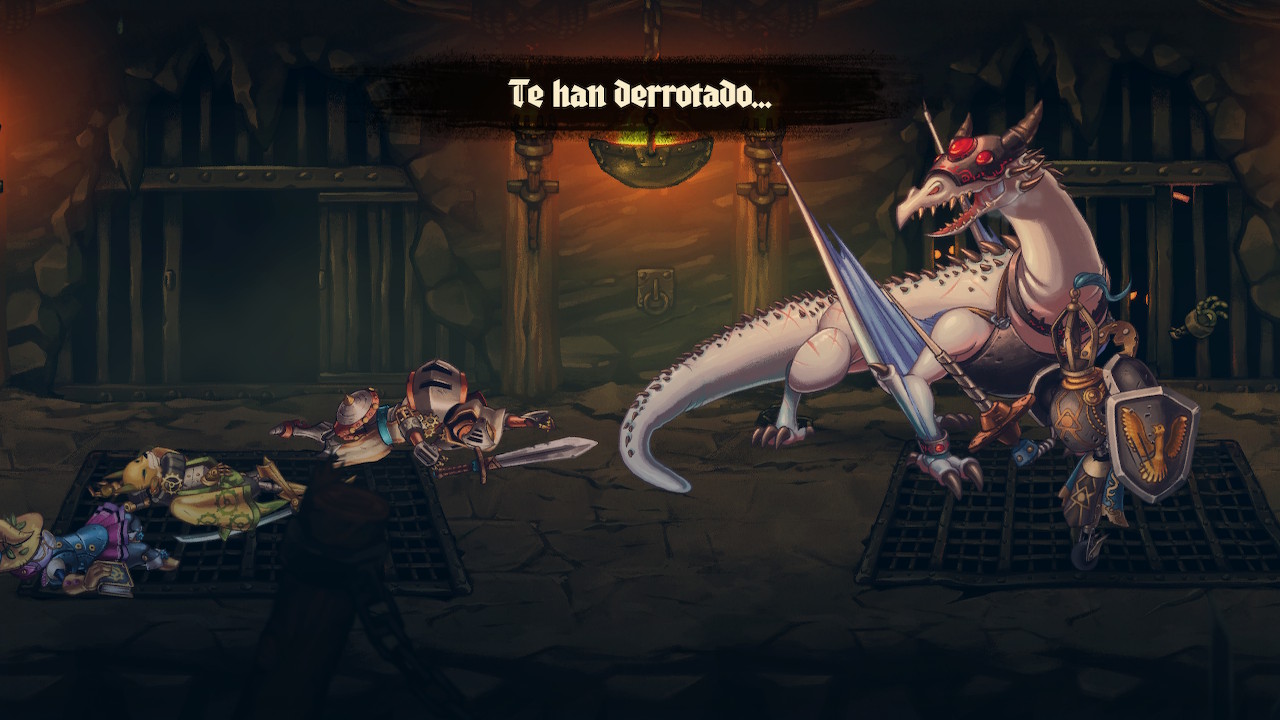
In terms of graphics, it must be said that the video game is artistically beautiful and looks like a world straight out of a painting. The best thing is that this beauty doesn't disappear even though it's a world with depth and a lot of colors.
However, it is a style very similar to the one used by the rest of the SteamWorld saga and that makes it quite beautiful and unique, along with its soundtrack in which we have very good themes but there are also themes that are not only repetitive but heavy, but very medieval that fit with the story, gameplay and graphics.
SteamWorld Quest: Hand of the Gilgamech proves that Image & Form can do anything you throw at it, as the genre of this SteamWorld installment came from a survey the company itself conducted with fans on Twitter. Thus, they created SteamWorld Quest, an RPG that blends with the tactical and platforming games of previous installments while remaining consistent with the saga's style.
If you like RPGs, the characters of SteamWorld, or just want to have a good time with a game with a great narrative, gameplay, art style, and soundtrack that will keep you entertained, this is the game for you, available on Nintendo Switch, PC, and Google Stadia for €20 or even less.
Worst parts of the game
- The difficulty is sometimes excessive.
- The number of fights is excessive.
- The soundtrack can become very repetitive.
Best parts of the game
- The story is quite interesting and entertaining thanks to its characters.
- The touches of humor are well-infused throughout, and there are moments you honestly don't expect.
- The gameplay is perfect, especially during combat.
- It's artistically beautiful and looks like a world straight out of a painting.
Comments
Post a Comment