
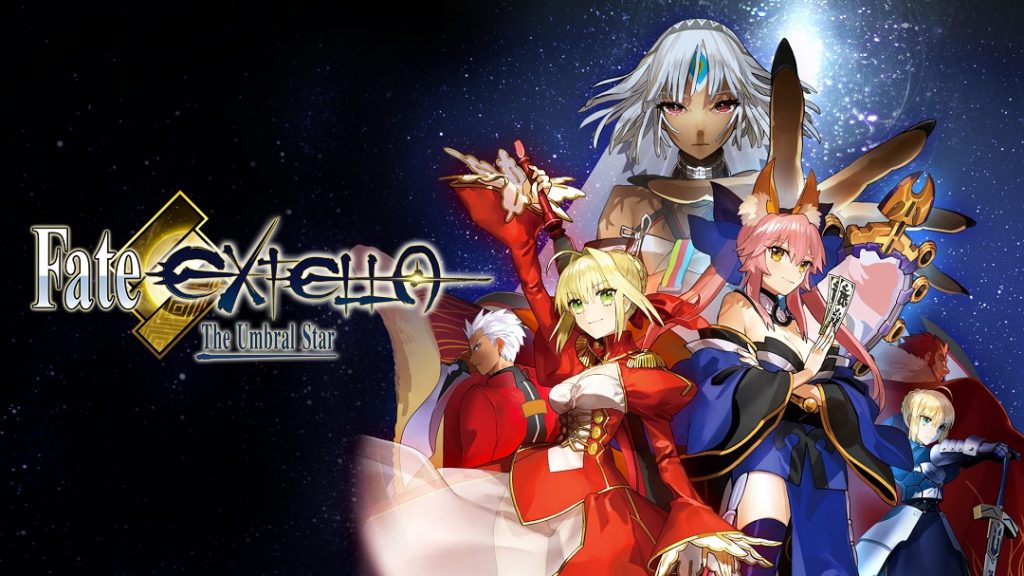
Fate/Extella: The Umbral Star was released in Japan on November 10, 2016 in a home console version for PlayStation 4, which features improvements on PS4 Pro, and in a portable version for PS Vita. For these platforms, it was released on January 17, 2017 in North America and on January 20, 2017 in Europe and Australia. Months later, we received the news that the title would have a version for the hybrid Nintendo Switch on July 21 and for PC on July 25 of the same year.
Today we are going to review this new installment of the video game adaptation of the famous Fate saga, having played the game. So without further delay and after this introduction, let’s begin!
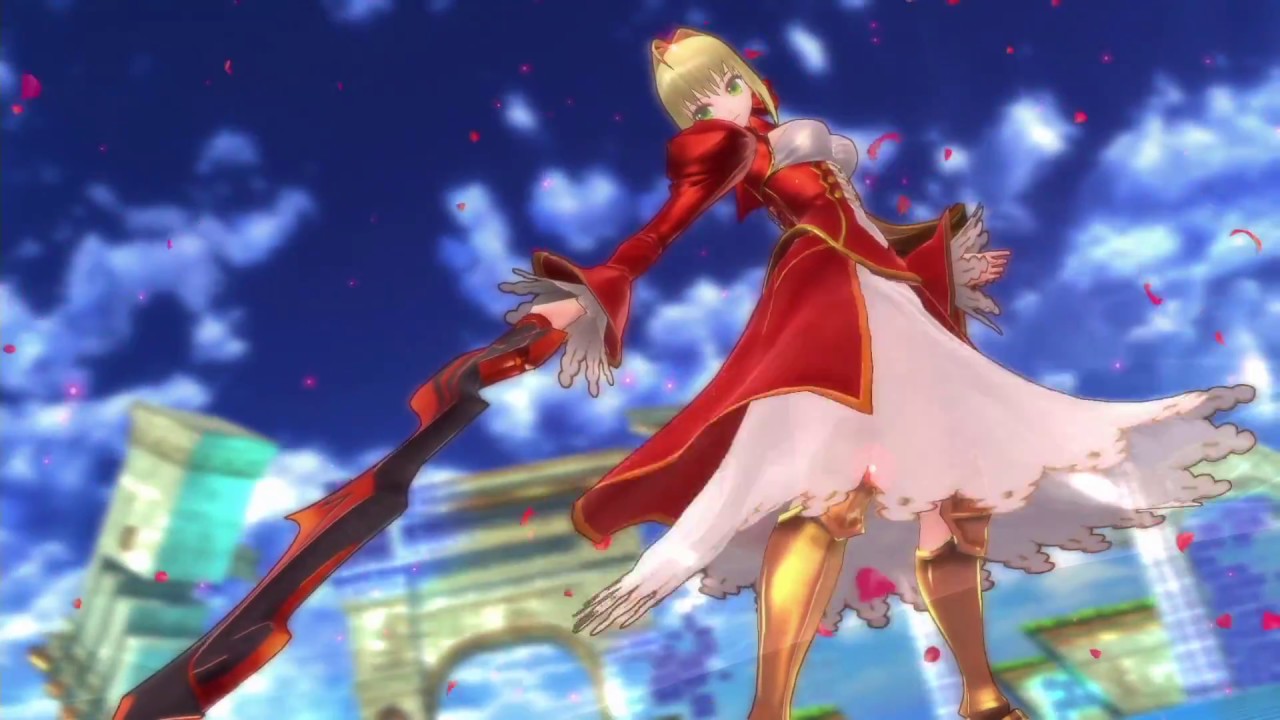
The story begins with the start of the Flame Poem Arc, in which we are introduced to a tale about a mysterious titan. After that, we go through a short tutorial in a huge hall with one of our protagonists, Nero Claudius of the Saber class (weapon: sword), and after completing it in less than a minute, we find ourselves in that same hall but with a large dark titan similar to the one shown at the beginning attacking us, while a mysterious character speaks to us.
In this world, the events of Fate/Stay Night took place, but an incident in 1970 caused the mana of the Earth to gradually disappear until, by 2030, it had completely vanished. Because of this, a replicator of the Holy Wars was created on the Moon, which would fully recreate the Moon itself, the Servants, the mana, the power of the Masters… This system is called SE.RA.PH, whose core lies in the Moon Cell, which contains all the information of everything SE.RA.PH recreates, including continuously generated new worlds and the Spirit Cores of historical Servants, forming a fairly complete roster. In SE.RA.PH, the fourth Holy Great War was held among 128 Masters, which was won by Hakuno Kishinami, our controllable protagonist. Little by little, no Masters were left on the Moon, and Hakuno became the only one.
Hakuno was divided into three parts: mind, soul, and body, and these were split between Nero Claudius, Tamamo no Mae, and Altera, also known as the monster Sephyr. Shortly after, we awaken with Nero, and she explains everything about the virtual world, where, as the winner of the Holy Great War, she carries a mysterious ring called the Regalia, which grants her royal authority over SE.RA.PH and access to the Moon Cell. Soon after, we are introduced to Nero’s four companions and the situation is explained: Nero’s enemy, Tamamo no Mae of the Caster class (weapon: wheels), controls 50% of the lands of the virtual world, and the mission is to fight to protect what remains and to reclaim what Tamamo controls.
At the end of that timeline, it is reset by the Moon Cell administrator known as Archimedes, and we move into the Orchid Words Arc, with Tamamo no Mae of the Caster class (weapon: wheels) as the protagonist, where we will fight against a Nero who is very emotional and has much stronger emotions than the Nero from that time in the Flame Poem Arc.
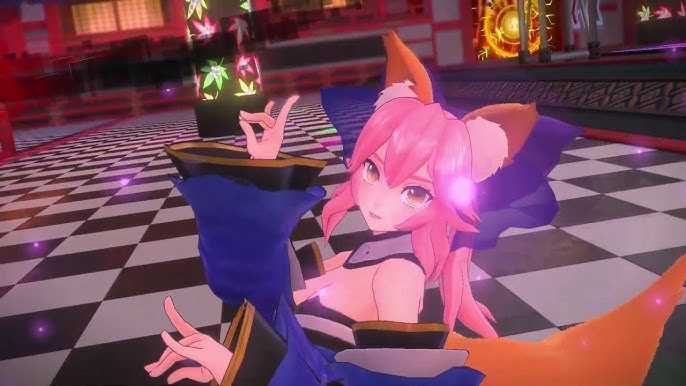
Tamamo’s army will be made up of four people we already knew from fighting them in the Flame Poem Arc. The story in the Orchid Words Arc feels both repetitive and unique at the same time, since Tamamo has a very different personality, but several scenes from the previous arc are repeated. Fate/Extella: The Umbral Star also has another arc that brings the story to an end, the Dawn Arc, but we’ll leave that for you to discover on your own!
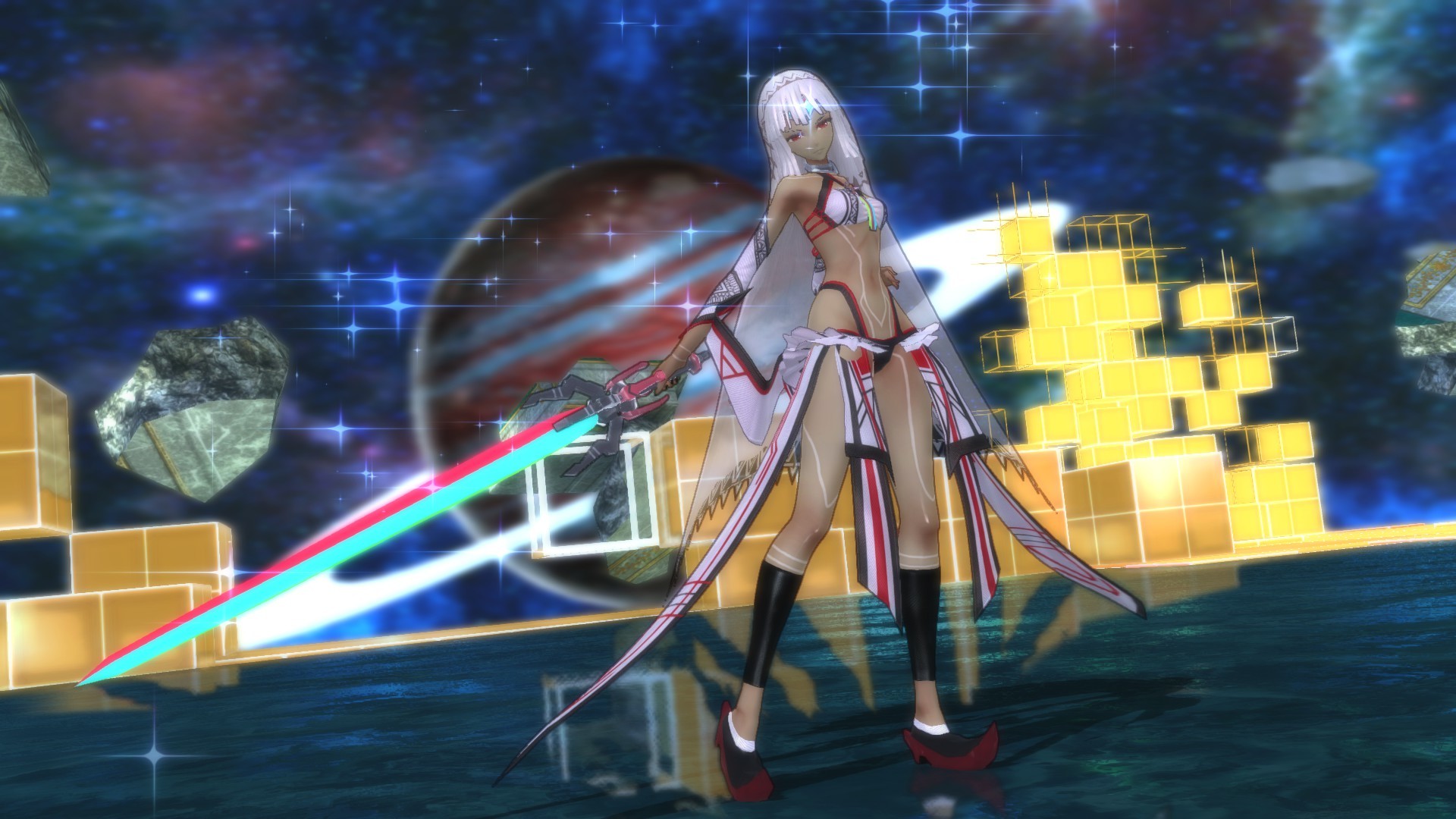
Definitely, the story of Fate/Extella: The Umbral Star is both unique and repetitive at the same time. The story is excellent and full of heart and life, like the rest of the Fate series, but having to partially repeat it three times makes it feel like a chore, especially between Nero’s and Tamamo’s storylines, which are basically the same. On the other hand, Altera’s route doesn’t have as much depth as the others.
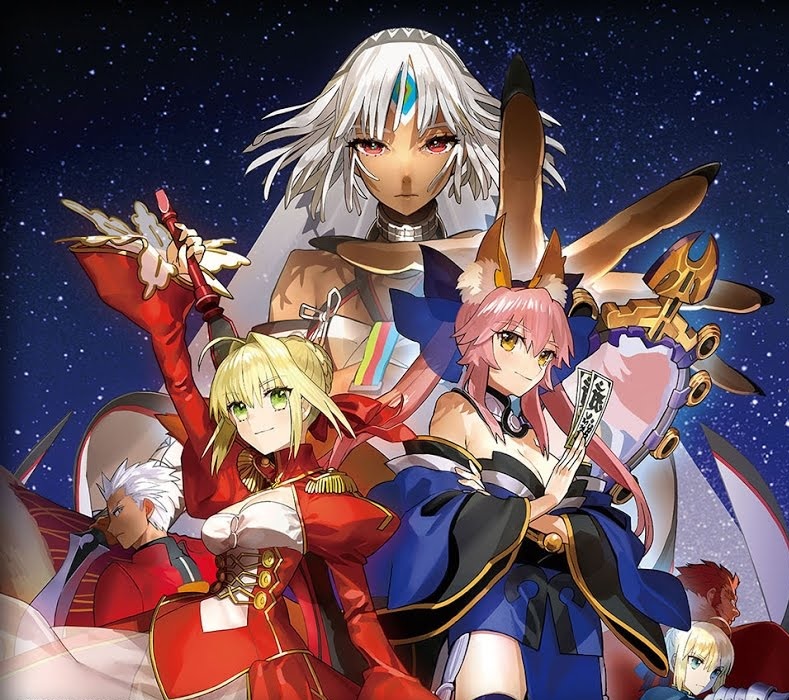
In this title we can play three modes: Main Story, Side Story, and Free Battle, not including the Gallery mode, which contains images, videos, and other content such as artwork and music from the game. The first is the main story with three narrative arcs for the three protagonists, the second consists of 13 short stories about secondary characters from the story mode, and in the third mode we can fight battles with Servants, Good vs Evil, choosing the character we want to control and the battle we want from the arc we feel like playing, since we also have to select the narrative arc in which we want to play the battle from the 16 story arcs (3 main and 13 secondary).
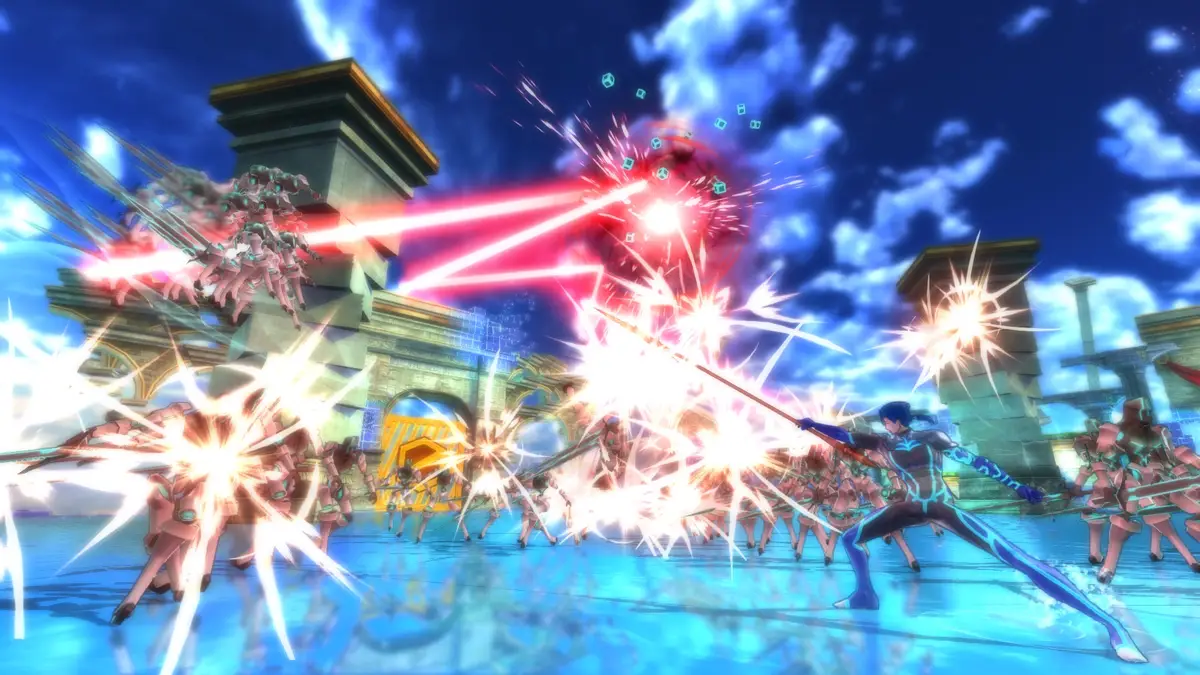
During battles, the game is a pure musou in which we have to beat hundreds of enemies at once and capture different areas by defeating enemies such as Aggressors, Plants, Boss Servants… In addition, each class has special characteristics such as exclusive attacks, and the three main story characters, apart from the universal burst mechanic, also have a unique transformation each. The gameplay is quite more complex than a standard musou, sometimes even too complex, but it is packed with content, making it very complete.
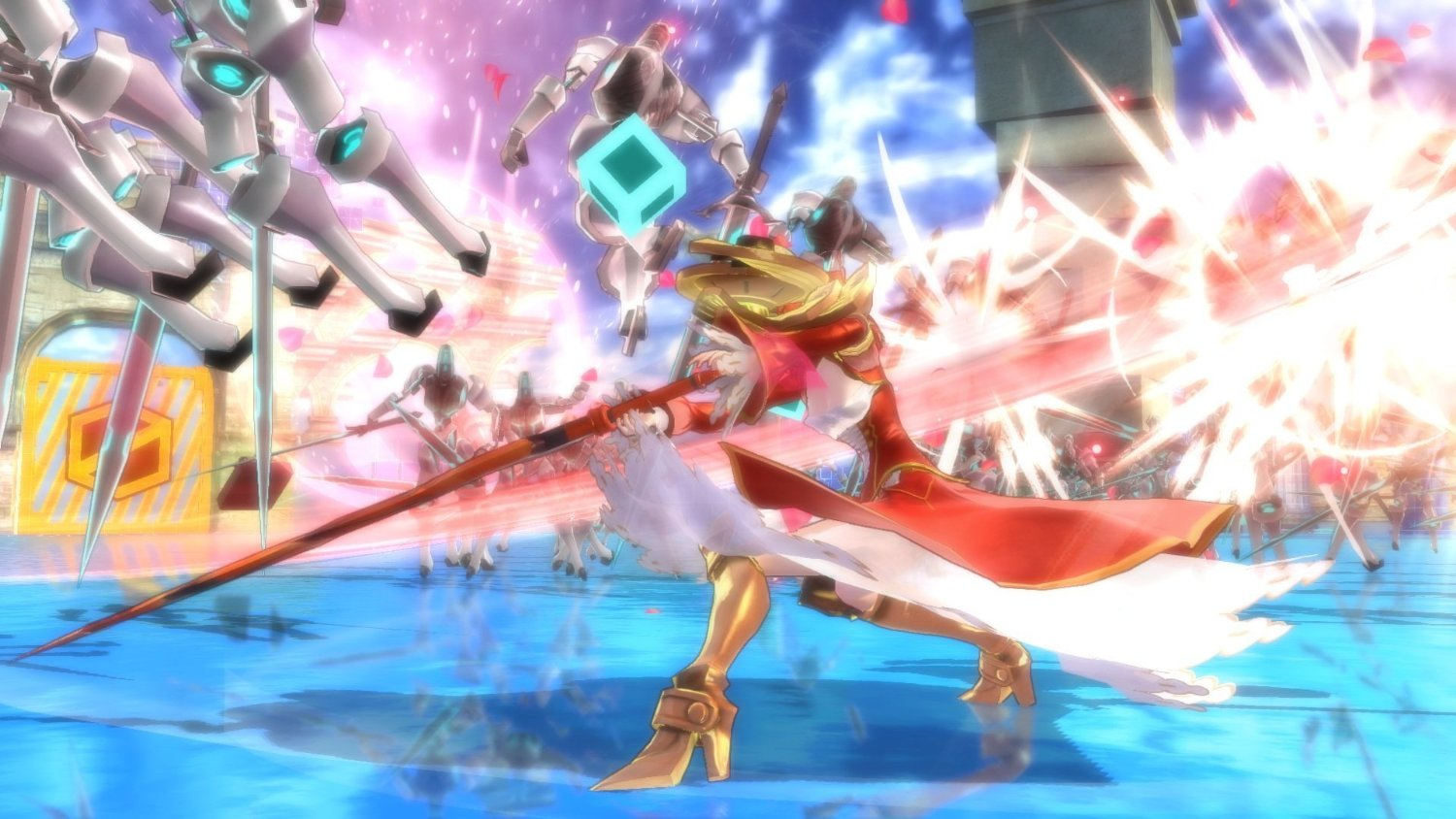
The graphics in this title look flawless, with a smooth finish that makes it feel like you are inside an anime world even during battles, since the game’s engine does not change much between combat and cutscenes. The game runs smoothly, and a musou game with good fluidity makes the overall user experience much more visually enjoyable.
The music stands out a lot in certain parts of the game, such as the opening, which shows different moments from the three story arcs and the 16 characters from the different classes and teams fighting and moving through mountains. The rest of the soundtrack is mostly electronic, giving life to the battles. There are also, to a lesser extent, piano solos and other instrumental pieces, but those are reserved for important moments in the story.
If you like Fate, this is your game. The three stories come together to form a single one that, although sometimes heavy and repetitive, is completely unique and fun, and makes you love characters like Nero, Tamamo, or Altera, and hate many others. On the other hand, the gameplay is the most fun and exciting part of the game, along with the three different modes that add a lot of variety, plus its large roster of characters, all quite different from each other and with the occasional reference to the rest of the Fate series. Completing the Story Mode, leveling up characters, finishing the 13 Side Story chapters, clearing stages on different difficulty levels, enjoying Free Battle fights, checking the Gallery, and unlocking all the secret content in Fate/Extella… without a doubt, you have a game for a long time!

Worst parts of the game
- The story can become heavy and repetitive.
- The gameplay can end up being too complex.
- The need to have knowledge of Fate to understand it.
Lo mejor
- The story has Fate written all over it and a lot of heart.
- The number of playable characters is high and of very good quality.
- The gameplay is very complete, including many game modes.
- The graphics are smooth and effective, as if it were an anime.
- The soundtrack is one of its most unique aspects.
Comments
Post a Comment