
![[Analisis] Disaster Report 4: Summer Memories](https://img.vidaopantalla.es/2020/04/Disaster-Report-4-Summer-Memories.jpg)
Disaster Report is a series that has been around for many years and one saga that very few people know about. The first installment arrived in 2003 for PS2, and in this game, we had to escape from an artificial island that was being destroyed by disasters that had already devastated other continents. Later, in 2007, Disaster Report 2 was released, also for PS2, better known as Raw Danger. The story took place around an underground city in Japan called Geo City, and we had to find our family.
In 2009, Disaster Report 3 was released for PSP. It was more standard than the previous installments, with its story taking place in a normal Japanese city, with a university student as the protagonist, where choices affect the story, and it also added co-op thanks to the protagonist's friend. Others may remember Disaster: Day of Crisis, which, although not part of this series, was a joint development between Nintendo and Monolith Soft exclusively for Wii and draws heavily from the natural disasters and gameplay featured in this series and other films of the genre.
A few weeks ago, almost 11 years after the release of Disaster Report 3, Disaster Report 4: Summer Memories has finally been released for PS3, PS4, Nintendo Switch and PC, developed by Granzella Inc. after they bought the saga from the developer of the first 3 parts, Irem and today we are going to analyze it in its Switch version:
![[Analisis] Disaster Report 4: Summer Memories](https://img.vidaopantalla.es/2020/04/disaster-4-1024x512.jpg)
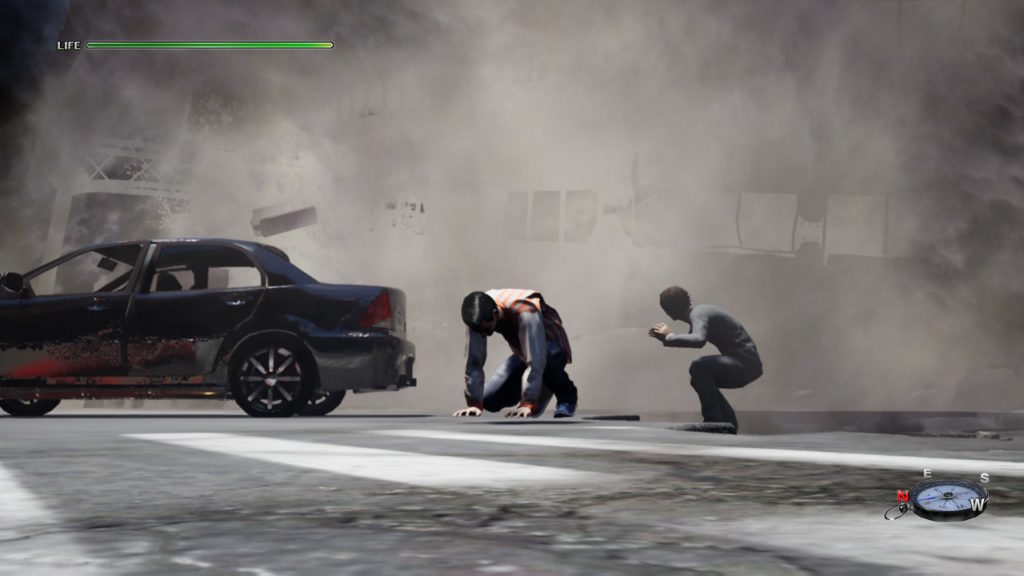
The story begins as we're on the bus arriving at the main city, Suiren City, and an old lady boards the bus. We then have to make our first decision: whether to get up (kindly, furiously, realizing our stop is the next one). When we decide, all the phones on the bus will start ringing. We'll take out ours, see an earthquake alert, the ground will start to shake, and BOOM! The bus will crash into a car.
A few minutes later, we'll wake up from the crashed bus and get up, feeling another earthquake afterward and being able to move around an environment completely destroyed by the first earthquake, with many injured people and wreckage left behind. We can talk to and help. We will have to move forward helping several people like Teacher Higa who we meet at the beginning of the story and who is looking for 3 of her students who had not gone to school to go shopping or to be in this same district where the earthquake catches us, once we help her she joins us and in that same district we meet a man who looks like a mobster to whom we will have to tell if we have seen someone with the black t-shirt who just passes behind him when he speaks to us, it is in our hands whether to tell him that he just passed behind or send him to the opposite side.

Afterwards, we'll continue with Higa and his students to the next section, passing through a lot of rubble and even a fire, which will determine what we do to save ourselves and the girls. Once there, we'll find that all the exits are destroyed, and we'll have to help the locals, like the guy in a black shirt being followed by the mobster named Tomoya. He wants us to look in a locker when we get to the subway and take it to the port where we're going to leave the city.
In that same store, we'll meet one of the most horrifying people on the planet, a man named Korozawa, posing as a shopkeeper, selling things that aren't his at sky-high prices (about 344.72 euros/376,52 dollars for a bottle of water). Afterwards, we'll move on to the main areas of the city, now without Higa and company, where we'll see much greater destruction, starting with the one that opens the exit to the dead-end zone. We'll also meet a girl named Yayoi with whom we'll almost die, falling asleep on the floor as soon as we reach the next area. We'll have to survive until we reach the subway, encountering increasingly worse things along the way.
Near the subway, we'll meet one of the game's two rival companies, Vestola, where we'll learn for the first time about the other company, Kerberos, and its not-so-friendly president, whom we'll see several times throughout the story, especially in the postgame. Once on the subway, we'll save a girl named Kanae trapped inside. She'll join us until we reach the port and beyond, until we realize she's Tomoya's girlfriend. From here on, the game gets much more interesting with the characters we've met up to this point and other new ones, both good and evil, so we'll let you discover it for yourselves. Although I haven't mentioned it, there are some deaths.
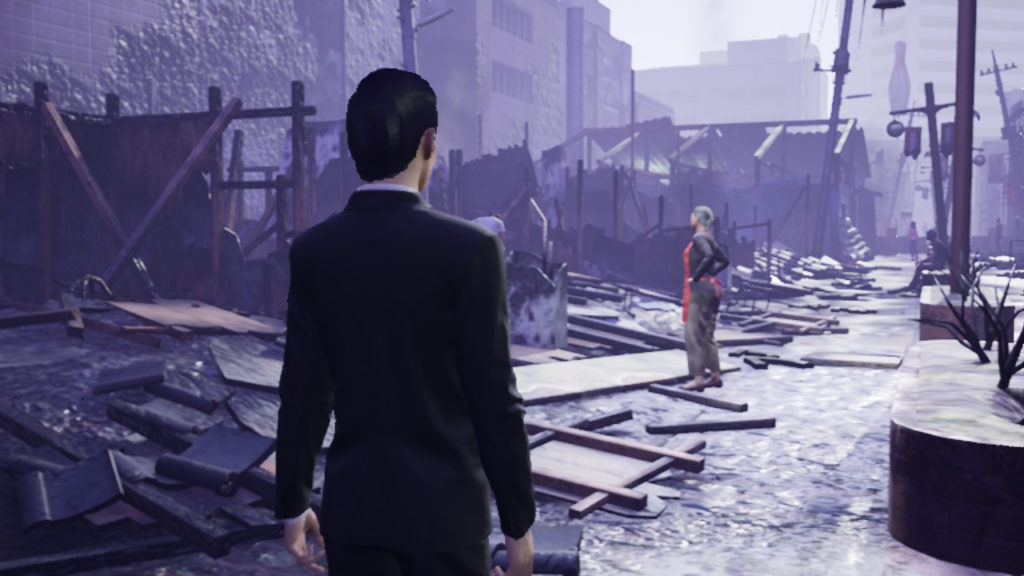
Now it's time for us to talk about the story in general. This story is incredibly surprising because when you first enter the game, you expect, well, an earthquake. We'll have to escape from it, help some NPCs with something generic, and some important characters will join us throughout the adventure, and it's not like that at all. When we really start to get into the game, we realize what the story is about. The earthquake itself isn't the main character, but rather the damage it creates in the lives of the people we meet. What's more, I say people, not characters, because they feel like real people we would meet in any city.
The best thing is that we really get to know these people and see them evolve throughout the story, both for better and for worse. We see how some choose one path and others another, while we choose our own path thanks to the decisions that will affect the lives of the people we help. The character development is very good, if not excellent, and there are some twists and turns that are very well done. On the other hand, the earthquake is merely a device to highlight these people and the destruction and death it can cause to our own planet, and it pushes both us and them to the limit.
After avoiding and escaping the earthquake—that is, finishing the game—we experience a postgame that could have easily been included in a later DLC, where we see how the lives of the people we encountered during the earthquake have evolved six months later, at Christmas. There, we see how many have developed due to the trauma of the earthquake, and we see that many have improved thanks to six extra chapters that serve as an epilogue where we also discover some dirty tricks. It's undoubtedly a story very focused on and developed by and for the characters, with the natural disaster designed to push them to their limits.
![[Analisis] Disaster Report 4: Summer Memories](https://img.vidaopantalla.es/2020/04/12-1.jpg)
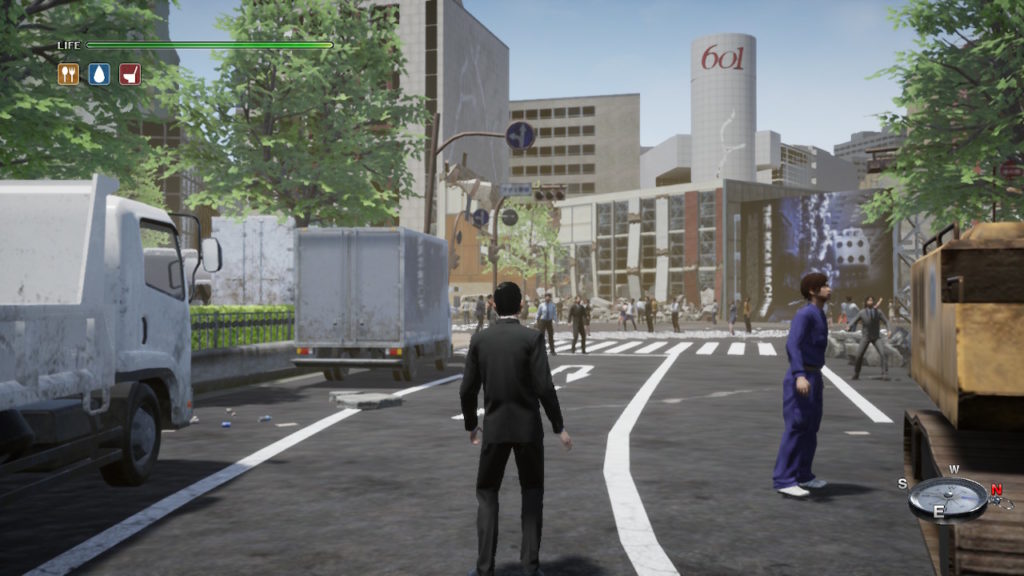
The gameplay of this game is divided into several parts. To begin with, the game is an exploration game with several fairly open areas where various things will happen depending on the decisions we make and whether or not an aftershock occurs in that area. Our character will have a health bar that will be linked to a stress bar divided into hunger, thirst, and urge to go to the bathroom. This will begin to drain our health if absolutely necessary, potentially killing us all three times. It has a very funny animation if we're peeing. Be careful with buildings falling in your face, heights, and fire, as these can kill you instantly.
We'll satisfy our hunger with food we buy, our thirst with drinks, and our urge to pee by going to different bathrooms. We can also fully customize our character with costumes (many of which can be downloaded as free DLC). Throughout the story, we'll be able to drive vehicles, collect items we find, and, finally, the most important thing will be our decisions, as they will determine where the story will go. It is a very complete gameplay for a very complete game.
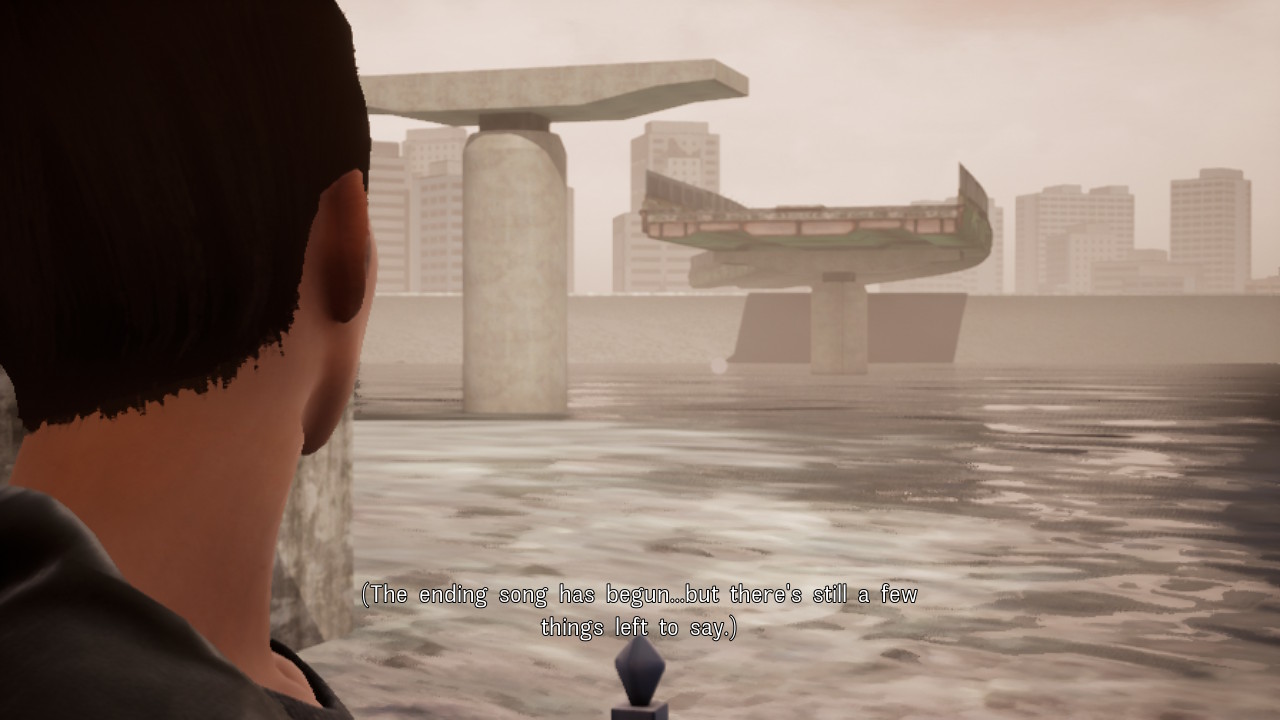
We also personally find it very funny when the protagonist breaks the fourth wall, like at one point in the story when we can change the title or the title screen of the game to another one or others when the protagonist says "the ending song is already playing," not including the thousands of posters of the game throughout the city.
The graphics are quite good in the world having a huge world that looks very realistic and with a collision engine that makes falling buildings and fire look very realistic too, that is, the game looks quite painful in the cinematics at least in this version of Switch and especially in portable mode, also there are times that even in the playable part it feels like the game has a lot of noise and fps drops.
The soundtrack is wonderful, with calm and intense themes, perfect for an earthquake and the chaos it creates, and the game has sung songs for just the right moments.
Disaster Report 4: Summer Memories is a game that, while it may seem quite simple if you haven't played it before, will make you feel that its story, with its impressive character development, and its excellent gameplay of exploration and decision-making come together to create a game that, along with its realistic graphics, will make us feel like we're actually in that city, meeting those people and helping them with whatever they need while keeping a building from collapsing on us.
The soundtrack complements the story, gameplay, and graphics with calm, intense music that adapts to the atmosphere and shows us important moments for the characters with sung songs.
The game is available on PS4, Nintendo Switch, and PC at a base price.
Worst parts of the game
- The graphics can be very noisy and laggy, which can severely hinder gameplay.
- Sometimes the length feels too long, with parts of the game feeling like they're just there for padding.
Best parts of the game
- The story is beautifully scripted, deeply emotional yet rich with unique moments.
- The gameplay is incredibly unique and varied, with thousands of different things to do.
- The world and collision design are excellent.
- The soundtrack is quite excellent, even featuring songs with singers.
Comments
Post a Comment